
Infrared vs Webcam Head Tracking: Why IR is the Pro Choice
Evaluating infrared vs webcam head tracking helps gamers select reliable motion peripherals for virtual cockpits. Specifically, dedicated receivers provide high accuracy without consuming excessive system resources. Consequently, virtual pilots and sim racers enjoy smooth 6DOF control across all lighting conditions.
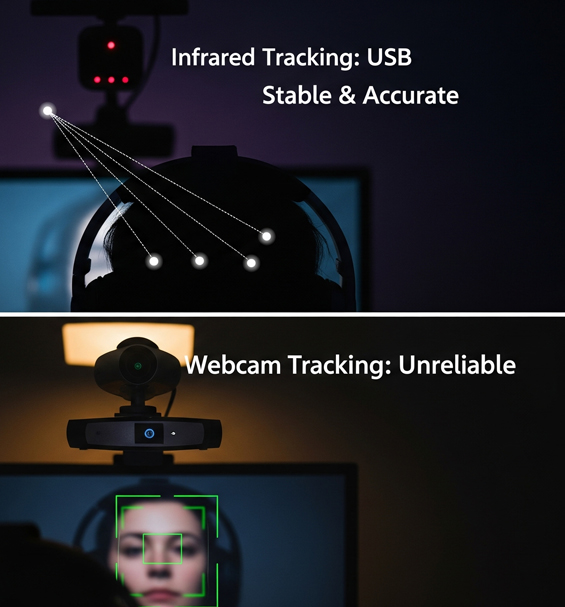
When upgrading your flight or racing simulator setup, selecting the correct tracking method makes a massive difference. However, while software-based facial recognition uses standard cameras, dedicated active light arrays deliver superior stability. Therefore, understanding the structural differences between these two solutions ensures you choose the best hardware for your rig.
Webcam Performance: Convenience with Trade-offs
Standard camera tracking uses software algorithms to detect facial features like eyes, nose, and mouth. As a result, the main advantage of this approach is low entry cost, as many users already own a desktop camera.
However, processing full-color video streams requires significant CPU resources, which can reduce in-game frame rates during demanding flight or racing sessions. Furthermore, changing room light, shadows, or looking away from the camera often causes tracking loss, unexpected latency, and sudden camera jitter.
Infrared Head Tracking: Precision and Performance
An active infrared setup uses a filtered sensor paired with three active LED points mounted to your headset. Specifically, the sensor ignores visible ambient light, tracking only the distinct infrared signals emitted by your clip. Comparing these technologies highlights several distinct performance advantages:
- Total Lighting Immunity: Active IR tracking operates flawlessly in complete darkness or bright sunlight.
- Near-Zero System Overhead: Processing three light points requires minimal CPU usage, preserving maximum frame rates.
- Sub-Millimeter Precision: High sensor refresh rates deliver instant 6DOF response without motion delay or axis drift.
Comparing Hardware Options for Simulation
While software tracking offers an easy entry point, active infrared hardware remains the gold standard for dedicated simmers. In addition, pairing an active IR clip with open software like OpenTrack grants complete control over response curves, deadzones, and input filtering.
Ultimately, choosing active infrared technology guarantees consistent accuracy, low latency, and long-term reliability for your cockpit setup.