
What is a Head Tracker and How Does It Work?
Learning what is a head tracker and how does it work helps simmers choose effective cockpit hardware. Specifically, active optical clips map real-world head movement directly into game engines. Consequently, virtual pilots and drivers gain fluid 6DOF control without wearing heavy virtual reality headsets.
If you are new to flight or racing simulators, you have likely heard players discuss motion hardware. At its core, an active clip translates subtle physical head turns into proportional camera movements on screen. This setup replaces manual hat switches and mouse looking, freeing your hands strictly for control inputs.
What is a Head Tracker and How Does It Work in Sim Games?
At its foundation, optical tracking relies on a dedicated sensor and an active light source. When you turn to look left, your in-game view rotates smoothly across the driver or pilot seat. Furthermore, leaning forward zooms your camera directly into dash gauges or flight instruments.
Because the movement uses multiplier curves, a small physical rotation of 20 degrees translates to a full 90-degree view turn. Therefore, you maintain clear line of sight with your monitor while scanning your entire virtual cockpit.
How Active Infrared Systems Process Motion
The most reliable tracking hardware uses active infrared (IR) light points. The system operates using two primary hardware components working in tandem:
- The Active LED Clip: A lightweight bracket mounting three infrared points directly to your gaming headset.
- The Filtered IR Camera: A specialized receiver sitting above your monitor, calibrated to track active light points while filtering background room light.
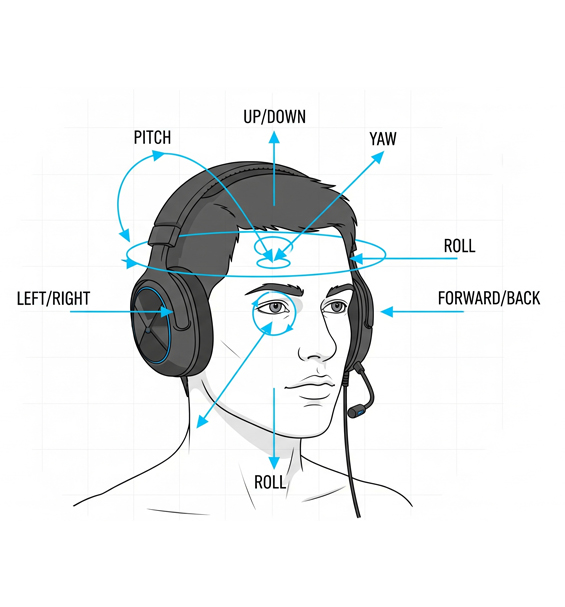
As your head moves, the camera records changing spatial coordinates between those three points. Open software like OpenTrack processes those coordinates instantly into six degrees of freedom (6DOF): pitch, yaw, roll, and x, y, z translation.
What is a Head Tracker and How Does It Work for Open Setups?
Active optical clips offer an ideal solution because they decouple hardware from closed, proprietary software ecosystems. You enjoy precise, zero-latency motion while maintaining total freedom to calibrate response curves, deadzones, and input filters.
Ultimately, combining an active clip with open mapping software delivers professional-grade accuracy, high durability, and maximum immersion across all major simulation titles.