
Budget Head Tracker vs. Premium: Is an Alternative Worth It?
When evaluating a budget head tracker vs premium setup, software flexibility matters. Hardware reliability is also vital. Choosing open-source hardware lets simmers save money. At the same time, you retain high precision across major flight and racing titles.
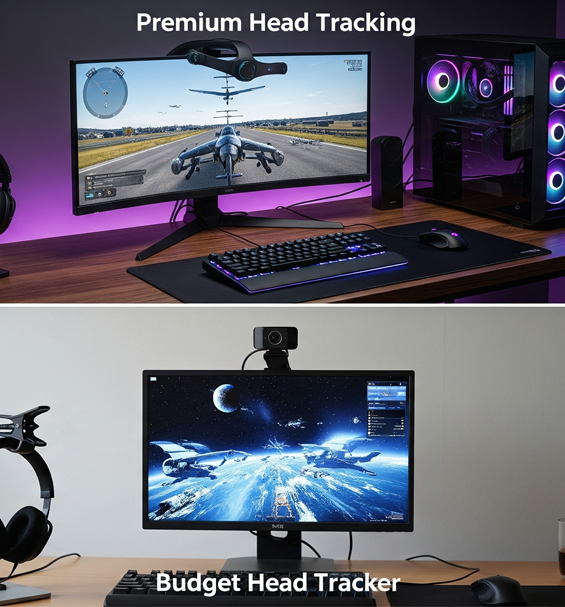
When you are serious about simulation, head tracking is essential. For years, high-cost proprietary brands dominated the market. This leads many simmers to ask a simple question. Is an open-source clip a smart choice, or is it an unnecessary compromise?
Defining the Core Features and Differences
Typically, a commercial brand bundles proprietary software with a high price. An affordable setup relies on a simple USB infrared clip instead. It pairs with open-source tools like OpenTrack. The underlying optical hardware operates similarly in both choices. Therefore, the core difference comes down to pricing and software freedom.
Performance and Tracking Accuracy in Games
Infrared optical tracking is well established across simulation games. A durable USB infrared clip connects easily to community mapping software. Once connected, performance matches expensive commercial units. As a result, you enjoy smooth 6DOF motion during dogfights in DCS World or tight cornering in Assetto Corsa.
Furthermore, custom curves let you fine-tune deadzones and smooth out jitter. You can also tailor axis scaling to fit your cockpit view.
Budget Head Tracker vs Premium Value Verdict
Choosing an open infrared unit is a smart investment. Unbundling physical tracking points from closed software gives you an effective system for less money. In addition, replacing individual components or cables in open designs is straightforward if parts wear out over time.
Therefore, evaluating your options shows that open hardware delivers professional tracking without the brand markup. It remains the ideal choice for enthusiast simmers.